
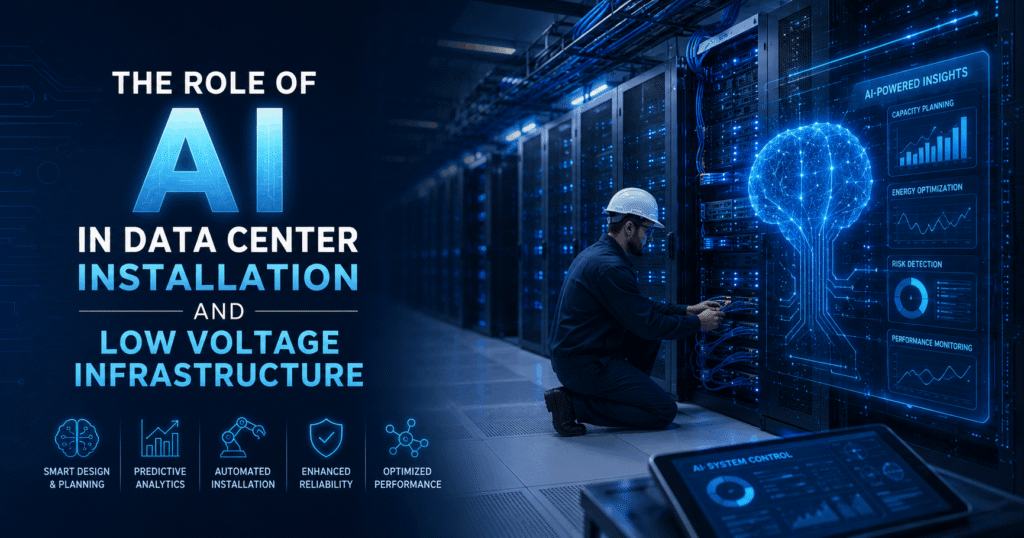
Artificial intelligence is changing how businesses build and run their networks. AI in data center installation is no longer just a buzzword. It is becoming a real part of how facilities are planned, wired, and managed every day.
For Texas businesses, this shift matters. Data centers are growing fast across the state. Companies need infrastructure that can keep up with demand while staying efficient and easy to manage. This guide explains how AI is shaping data center installation and low voltage cabling systems, and what it means for your business.
What Does AI in Data Center Installation Mean?
AI in data center installation refers to using smart software and tools to plan, build, and manage data center infrastructure. This includes everything from cable layout design to equipment monitoring after the system is live.
Instead of relying only on manual planning, AI tools can analyze data, spot patterns, and suggest better designs. This helps installers make smarter choices before the first cable is ever run.
AI does not replace skilled technicians. Instead, it gives them better tools. The result is faster planning, fewer mistakes, and infrastructure that performs better over time.
Why AI-Powered Data Center Infrastructure Is Growing in Texas
Texas is one of the top states for data center growth. Cities like Houston, Dallas, and Austin are seeing major investment in new facilities. This growth comes with pressure. Businesses need infrastructure that is reliable, efficient, and ready to scale.
AI-powered data center infrastructure helps meet this demand. It allows teams to plan large projects with more accuracy. It also helps existing facilities run better without major rebuilds.
Here are a few reasons Texas businesses are paying attention to AI-driven infrastructure:
• Rising demand for cloud computing and data storage
• Growth in healthcare, energy, and logistics sectors that rely on data
• Pressure to reduce energy costs and improve uptime
• A growing need for facilities that can scale quickly
How AI Improves Data Center Cabling Design
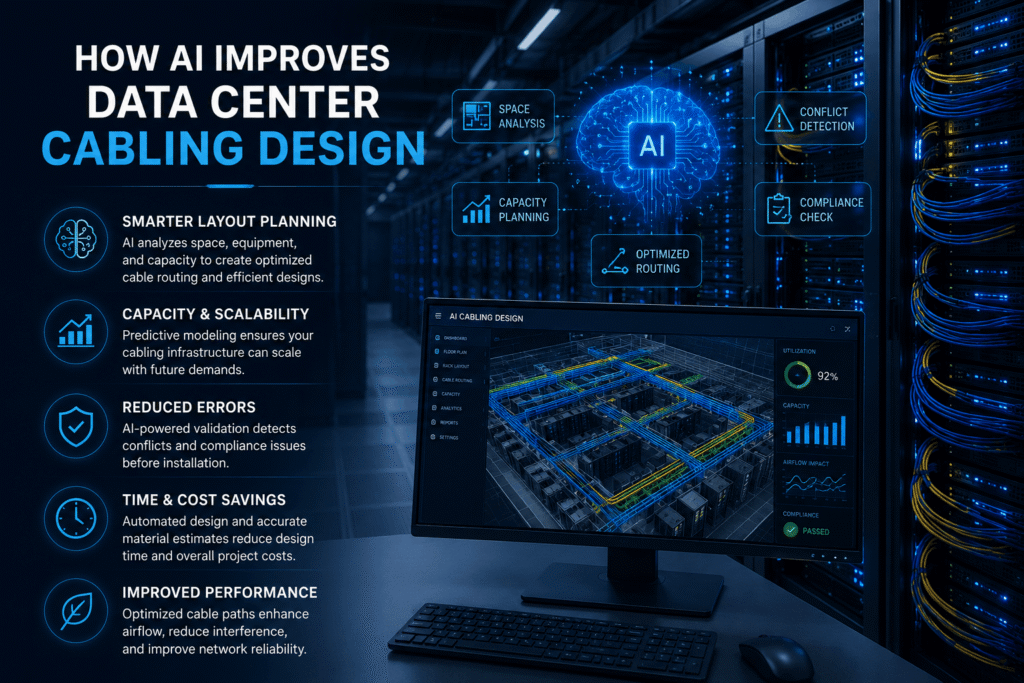
Cabling design is one of the most important parts of any data center project. A single mistake in cable routing can cause problems for years. This is where data center cabling design with AI makes a real difference.
Smarter Layout Planning
AI software can model a building before any cables are installed. It can test different layouts and find the best paths for power and data cables. This reduces wasted cable runs and helps avoid bottlenecks.
Predicting Future Needs
AI tools can look at usage trends and predict how much capacity a business will need in the future. This helps design teams build in extra room for growth from the start, instead of running out of space too soon.
Fewer Design Errors
AI-assisted design tools can catch conflicts early. For example, they can flag a cable path that crosses too close to a power source or that does not meet code distance requirements. Catching these issues on paper is much cheaper than fixing them after installation.
ITS uses BIM modeling and detailed planning as part of our data center installation services. This approach helps reduce errors and keeps projects on schedule.
Intelligent Low Voltage Cabling Systems Explained
Low voltage cabling includes the data, network, and control cables that run through a building. These systems carry signals for networks, security, and building controls. Intelligent low voltage cabling systems add a layer of smart monitoring to this infrastructure.
Here is what makes a low voltage cabling system intelligent:
• Sensors: Small devices placed throughout the system track temperature, connection status, and signal quality.
• Real-time data: Information from sensors is sent to software that tracks performance around the clock.
• Automated alerts: If something goes wrong, the system can notify staff before it becomes a bigger problem.
• Self-documentation: Smart systems can keep their own records, so labeling and tracking stay accurate over time.
These features help facility managers catch problems early. Instead of waiting for a failure, they get a warning while there is still time to act.
AI Network Cabling Automation: What It Looks Like in Practice
AI network cabling automation covers the tools and processes that reduce manual work during installation and maintenance. This does not mean robots are pulling cable through walls. It means software is helping teams work smarter at every stage.
Automated Testing and Certification
After cables are installed, every run needs to be tested. AI-assisted testing tools can run checks faster and flag any cable that does not meet standards. This speeds up the certification process and improves accuracy.
Smart Network Monitoring
Once a network is live, AI tools can watch traffic patterns around the clock. They can spot unusual activity, predict when equipment may fail, and alert teams before small issues turn into outages.
Automated Documentation
Keeping accurate records of every cable, port, and connection used to take hours of manual work. AI tools can now generate and update this documentation automatically as changes happen. This keeps records accurate without extra effort from your team.
These automation tools work hand in hand with traditional structured network cabling installations. A well-organized cabling system gives AI tools clean, reliable data to work with.
Smart Data Center Installation in Texas: What It Means for Your Business
Smart data center installation Texas projects combine traditional construction skills with new digital tools. The goal is the same as always: build infrastructure that works. The difference is how that infrastructure is planned, tracked, and maintained.
For business owners, this means a few practical benefits:
• Faster project timelines: Better planning tools reduce delays and rework.
• Lower long-term costs: Predictive monitoring helps avoid expensive emergency repairs.
• Better uptime: Early warnings mean fewer surprise outages.
• Easier scaling: Systems are designed with growth in mind from day one.
Whether you are building a new facility or upgrading an older one, these benefits add up over time. They help your business stay competitive without constant infrastructure headaches.
How AI Supports Energy Efficiency in Data Centers
Energy use is one of the biggest costs for any data center. Cooling systems, servers, and network equipment all need power around the clock. AI helps reduce waste in a few key ways.
Adaptive Cooling
AI systems can adjust cooling based on real-time temperature data. Instead of running cooling at full power all the time, the system adjusts based on actual need. This can lead to real savings on energy bills.
Load Balancing
AI tools can shift workloads across servers to avoid overloading any single area. This helps equipment run more efficiently and last longer.
Predictive Maintenance
Instead of replacing parts on a fixed schedule, AI can predict when equipment is likely to fail based on real performance data. This reduces unnecessary replacements and avoids surprise breakdowns.
AI and Security: A Growing Connection
Data centers hold sensitive information. Security is not optional. AI is playing a bigger role in how facilities protect themselves, both physically and digitally.
Smart security cameras can use AI to detect unusual movement and alert staff in real time. Access control systems can flag unusual entry patterns. Network monitoring tools can spot signs of a cyberattack faster than manual review alone.
ITS integrates these tools as part of our commercial security and electrical services, giving facilities a stronger layer of protection alongside their network infrastructure.
The Role of Skilled Technicians in an AI-Driven World
It is easy to assume AI means less need for skilled workers. The opposite is true. AI tools are only as good as the people using them.
Trained technicians still need to install cables correctly, follow safety standards, and handle physical work that software cannot do. AI gives these technicians better information and tools, but it does not replace hands-on skill.
BICSI-certified technicians bring years of training to every project. When you combine that experience with AI-powered planning and monitoring tools, you get the best of both worlds: skilled work backed by smart data.
How to Prepare Your Business for AI-Powered Infrastructure
If you are planning a new data center or upgrading your current setup, here are a few steps to consider.
1. Start With a Site Assessment
Before adding any smart tools, you need a clear picture of your current infrastructure. A professional assessment identifies gaps and shows where AI tools can have the biggest impact.
2. Build on a Strong Cabling Foundation
AI tools rely on good data. That data comes from a clean, well-organized cabling system. If your current cabling is outdated or disorganized, this is the first thing to fix.
3. Add Monitoring in Phases
You do not need to upgrade everything at once. Many businesses start with monitoring in their most critical areas, then expand over time as budgets allow.
4. Work With an Experienced Installer
AI tools are only useful if the underlying infrastructure is installed correctly. Choose a provider with proven experience in both traditional cabling and modern, data-driven design.
Frequently Asked Questions About AI in Data Center Installation
Does AI replace the need for a professional installer?
No. AI is a tool that supports planning and monitoring. Skilled technicians are still needed to install, test, and maintain physical infrastructure.
Is AI-powered infrastructure only for large data centers?
No. Smaller facilities can also benefit from smart monitoring and AI-assisted design, especially when planning for future growth.
How does AI help with low voltage cabling specifically?
AI helps with planning cable routes, predicting future capacity needs, and monitoring system performance through sensors and automated alerts.
What is the first step toward smart data center installation in Texas?
Start with a professional site assessment. This identifies your current infrastructure status and shows where smart upgrades will provide the most value.
Does ITS offer AI-related infrastructure planning?
Yes. ITS uses modern design tools, including BIM modeling, as part of our data center installation process. We combine this with BICSI-certified installation to deliver infrastructure built for today and ready for tomorrow.
For more on how AI is shaping data center design and operations, the Uptime Institute publishes ongoing research on data center trends and best practices. You can also review smart building standards through BICSI, which sets guidelines for low voltage cabling professionals.
Build Smarter Infrastructure With ITS
AI in data center installation is changing how facilities are designed, built, and managed. From smarter cabling design to real-time monitoring, these tools help businesses run more efficiently and avoid costly downtime.
At the same time, none of this works without a strong foundation. Skilled installation, proper cabling, and certified technicians remain the base that smart technology builds on.
ITS combines decades of hands-on experience with wireless and managed network services, fiber optic installation, and modern design tools to help Texas businesses build smarter, more reliable infrastructure.
Contact Integrated Technology Solutions today to discuss AI-ready data center installation and low voltage infrastructure for your business. Call us at +1 888-985-5334 or visit our contact page to get started.
