
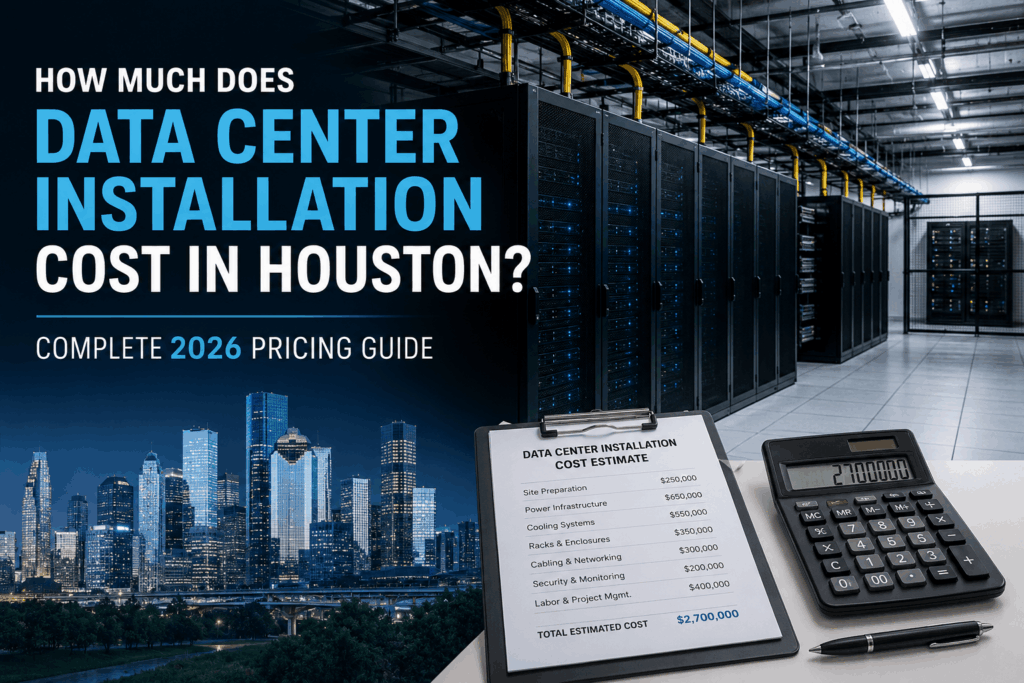
Planning a data center project in the Houston area requires understanding the full scope of costs involved. Whether you’re building a new facility, upgrading existing infrastructure, or expanding capacity, data center installation cost Houston pricing varies significantly based on size, redundancy requirements, and technology specifications. Having accurate budget expectations from the start prevents costly surprises and ensures your project delivers the reliability and performance your organization demands.
Houston’s unique position as a technology hub, energy center, and growing business market creates specific considerations for data center projects. The region’s climate, local building codes, available contractor expertise, and proximity to major internet exchange points all influence final project costs. Understanding these factors helps you make informed decisions that balance initial investment with long-term operational efficiency.
This comprehensive pricing guide breaks down every component of data center installation cost Houston projects typically encounter, providing realistic ranges based on current market conditions, labor rates, and equipment costs in the Greater Houston area.
Key Cost Components: Understanding the Investment
Data center installations involve far more than simply purchasing server racks and networking equipment. A complete project encompasses infrastructure, mechanical systems, electrical distribution, security, and specialized installation services that ensure everything works together reliably.
The major cost categories include:
Structural and Site Preparation: Building modifications, raised flooring, wall reinforcement, and pathway construction. These foundational elements support the weight of equipment and provide organized cable routing.
Electrical Infrastructure: Power distribution units (PDUs), uninterruptible power supplies (UPS), backup generators, transformers, and circuit protection. Reliable power is the foundation of data center operations.
Cooling Systems: Computer room air conditioning (CRAC) units, hot aisle/cold aisle containment, supplemental cooling, and airflow management. Houston’s hot, humid climate makes cooling design particularly critical.
Network Cabling: Fiber optic backbone, copper horizontal cabling, patch panels, and cable management infrastructure. Professional structured network cabling ensures optimal performance and simplified troubleshooting.
Security Systems: Access control, surveillance cameras, environmental monitoring, and fire suppression. Protecting physical and digital assets requires integrated security surveillance systems.
Installation Labor: Project management, certified technicians, testing and commissioning, and documentation. Skilled labor typically represents 40-60% of total project costs.
Small-Scale Data Center Costs (500-1,500 Square Feet)
Small data centers serve individual businesses, branch offices, or departmental needs. These installations support 5-20 server racks and provide essential redundancy without enterprise-scale complexity.
Typical Investment Range: $150,000 to $450,000
Detailed Breakdown:
Electrical Infrastructure ($40,000 to $120,000):
- 30-50 kW UPS system: $15,000 to $35,000
- PDU and distribution panels: $8,000 to $20,000
- Emergency generator (optional): $12,000 to $45,000
- Electrical installation labor: $5,000 to $20,000
Cooling Systems ($35,000 to $90,000):
- Precision air conditioning units: $20,000 to $50,000
- Hot/cold aisle containment: $8,000 to $25,000
- Supplemental cooling: $7,000 to $15,000
Network Infrastructure ($25,000 to $75,000):
- Fiber optic backbone: $8,000 to $20,000
- Copper cabling and terminations: $12,000 to $35,000
- Patch panels and cable management: $5,000 to $20,000
Physical Security ($15,000 to $45,000):
- Access control system: $6,000 to $18,000
- Surveillance cameras (6-12 units): $5,000 to $15,000
- Environmental sensors: $4,000 to $12,000
Site Preparation and Structural ($25,000 to $80,000):
- Raised floor installation: $12,000 to $35,000
- Wall and ceiling modifications: $8,000 to $25,000
- Fire suppression integration: $5,000 to $20,000
Houston-area businesses choosing small-scale deployments often find this size adequate for localized operations, disaster recovery sites, or edge computing applications that require proximity to end-users.
Mid-Sized Data Center Costs (1,500-5,000 Square Feet)
Mid-sized facilities support growing organizations, managed service providers, or companies consolidating multiple locations. These installations typically house 20-75 racks with N+1 redundancy for critical systems.
Typical Investment Range: $500,000 to $2,000,000
Detailed Breakdown:
Electrical Infrastructure ($150,000 to $600,000):
- Dual UPS systems (100-250 kW): $80,000 to $250,000
- Multiple PDU configurations: $30,000 to $100,000
- Backup generator (required): $25,000 to $150,000
- Automatic transfer switches: $15,000 to $100,000
Cooling Systems ($120,000 to $450,000):
- Multiple CRAC units: $70,000 to $250,000
- Comprehensive containment strategy: $25,000 to $100,000
- Chilled water systems (optional): $25,000 to $100,000
Network Infrastructure ($80,000 to $300,000):
- Redundant fiber backbone: $30,000 to $120,000
- Extensive copper distribution: $35,000 to $120,000
- Advanced patch panel systems: $15,000 to $60,000
Professional data center installation at this scale requires experienced project management and coordinated scheduling to minimize disruption if performed in occupied facilities.
Physical Security ($40,000 to $150,000):
- Multi-zone access control: $18,000 to $70,000
- Comprehensive surveillance (20-40 cameras): $15,000 to $50,000
- Advanced environmental monitoring: $7,000 to $30,000
Site Preparation and Infrastructure ($110,000 to $500,000):
- Extensive raised flooring: $40,000 to $180,000
- Structural reinforcement: $30,000 to $150,000
- Fire suppression systems: $25,000 to $100,000
- Specialized lighting: $15,000 to $70,000
Mid-sized data centers represent the most common category for Houston businesses requiring dedicated infrastructure but not needing carrier-grade facilities.
Enterprise-Scale Data Center Costs (5,000+ Square Feet)
Enterprise facilities serve large corporations, colocation providers, cloud service platforms, or organizations with mission-critical uptime requirements. These installations demand Tier III or Tier IV redundancy with multiple independent systems.
Typical Investment Range: $2,500,000 to $15,000,000+
At this scale, data center installation cost Houston estimates require detailed engineering assessments and customized designs. Costs per square foot range from $500 to $2,000+ depending on redundancy tier, equipment density, and specialized requirements.
Major Investment Categories:
Electrical Infrastructure (30-40% of budget): Enterprise power systems include multiple utility feeds, N+1 or 2N UPS configurations, redundant generators, and sophisticated power monitoring. Houston’s relatively stable electrical grid and competitive energy costs provide operational advantages, but redundant systems remain essential for business continuity.
Cooling and HVAC (20-30% of budget): Houston’s climate drives significant cooling requirements. Summer temperatures regularly exceed 95°F with high humidity, demanding robust cooling capacity and efficiency-focused designs. Many Houston facilities incorporate economizer systems that take advantage of cooler overnight temperatures, though these provide limited benefit compared to data centers in northern climates.
Network Infrastructure (10-15% of budget): Enterprise cabling includes diverse fiber routes, high-density copper distribution, and structured pathways supporting future expansion. Houston’s position as a major internet hub provides excellent connectivity options, with multiple carriers and internet exchange points reducing network costs compared to secondary markets.
Houston-Specific Cost Factors
Several regional considerations affect data center installation cost Houston projects differently than facilities in other markets:
Climate Impact: Houston’s hot, humid climate increases cooling requirements by 15-25% compared to temperate regions. However, lower heating costs and mild winters partially offset this premium. Humidity control systems prevent condensation and corrosion, adding $20,000 to $100,000 depending on facility size.
Hurricane Preparedness: Coastal proximity requires enhanced structural requirements, backup power systems, and flood mitigation measures. Building codes mandate specific wind load ratings and drainage systems. Budget an additional 5-10% for hurricane-resistant construction in coastal areas including Clear Lake, Galveston County, and Pasadena.
Labor Market: Houston’s large pool of industrial and construction workers provides competitive labor rates compared to markets like San Francisco or New York. Skilled data center technicians with BICSI certification command $75 to $125 per hour, while general electrical and mechanical contractors bill $60 to $95 per hour.
Permitting and Inspection: Harris County and City of Houston permitting processes are generally efficient, with electrical permits costing $500 to $3,000 depending on project scope. Inspection timelines average 2-4 weeks for standard projects, though complex installations may require additional review cycles.
Energy Costs: Houston benefits from competitive electricity rates averaging $0.085 to $0.12 per kWh for commercial users. These favorable rates improve long-term operational economics and accelerate ROI on energy-efficient equipment investments.
Hidden Costs and Budget Contingencies
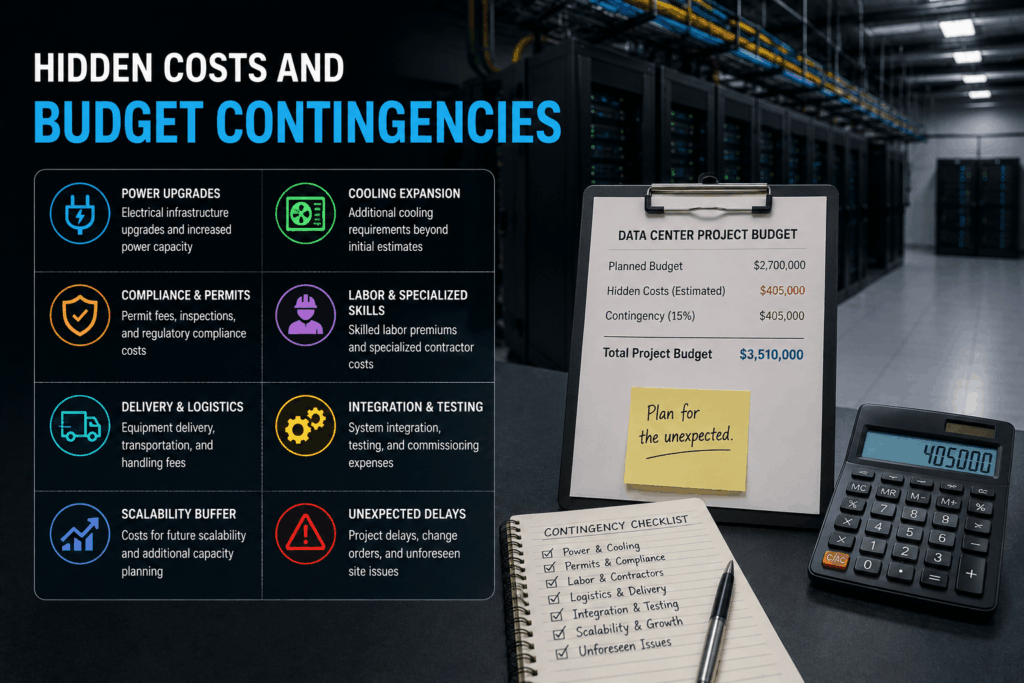
Experienced project planners know that initial estimates rarely capture every expense. Smart budgeting includes contingency allowances for predictable extras:
Site Surveys and Assessments ($5,000 to $25,000): Professional evaluations identify structural limitations, electrical capacity constraints, and environmental factors before detailed design begins. This upfront investment prevents costly mid-project changes.
Permitting and Compliance ($8,000 to $50,000): Building permits, electrical inspections, fire marshal reviews, and occupancy certifications add costs that vary by jurisdiction and project complexity.
Project Management (8-12% of construction costs): Professional oversight ensures coordinated execution, change order management, and quality control throughout installation.
Testing and Commissioning (5-8% of equipment costs): Comprehensive testing validates that all systems perform as designed before going live. This includes load testing electrical systems, airflow verification, and network certification.
Documentation and Training ($10,000 to $50,000): As-built drawings, operational procedures, and staff training ensure your team can effectively manage and maintain the new facility.
Plan for a 15-20% contingency budget above estimated costs to accommodate unforeseen conditions, change orders, and market price fluctuations.
Cost Reduction Strategies Without Compromising Quality
Smart planning can significantly reduce data center installation cost Houston totals without sacrificing reliability or performance:
Phased Implementation: Deploy infrastructure in stages aligned with actual capacity needs rather than building maximum capacity upfront. This defers capital expenditures and allows technology refresh cycles to improve efficiency.
Modular Systems: Prefabricated infrastructure modules reduce on-site labor and accelerate deployment. Modular PDUs, containment systems, and cable management can lower installation costs by 10-20%.
Energy-Efficient Equipment: Higher-efficiency UPS systems, variable-speed cooling, and LED lighting cost more initially but deliver rapid ROI through reduced operating expenses. Houston’s long cooling season amplifies these savings.
Standardized Designs: Organizations building multiple facilities benefit from standardized designs that reduce engineering costs and streamline procurement. This approach works well for retail chains, healthcare systems, and multi-site enterprises.
Competitive Bidding: Obtaining detailed quotes from multiple qualified contractors ensures competitive pricing. However, evaluate bids based on total value, not just lowest price. Experienced integrators prevent costly mistakes that plague cut-rate installations.
Working with Local Houston Contractors
Selecting the right installation partner significantly impacts both initial costs and long-term success. Houston’s market includes national integrators, regional specialists, and local contractors with varying expertise levels.
Evaluation Criteria:
Certifications and Training: BICSI credentials, manufacturer certifications, and ongoing technical training demonstrate commitment to quality. These qualifications directly correlate with fewer installation errors and better long-term performance.
Local Experience: Contractors familiar with Houston building codes, inspection processes, and local suppliers complete projects more efficiently. They understand regional considerations like hurricane preparedness and humidity control that outside vendors may overlook.
Project Portfolio: Review completed installations of similar size and complexity. Site visits to reference projects provide insights into workmanship quality and attention to detail.
Warranty and Support: Comprehensive warranties and responsive post-installation support protect your investment. Clarify what is covered, for how long, and what response times apply to service calls.
Professional commercial electrical services combined with specialized data center expertise ensure your project meets technical specifications while adhering to budget and schedule commitments.
Return on Investment Considerations
Data center installations represent substantial capital investments that require clear ROI justification. Key factors in financial analysis include:
Avoided Colocation Costs: Organizations currently leasing data center space can often achieve payback periods of 3-5 years by building owned infrastructure. Houston’s competitive real estate costs accelerate these timelines compared to high-cost markets.
Improved Reliability: Downtime costs vary by industry but often exceed $5,000 per minute for e-commerce, financial services, and healthcare applications. Properly designed infrastructure with appropriate redundancy prevents outages that devastate business operations.
Scalability and Flexibility: Owned infrastructure provides agility to deploy new applications, test configurations, and expand capacity without negotiating contracts or waiting for provider provisioning.
Operational Efficiency: Modern, efficient systems reduce ongoing energy costs by 30-50% compared to aging infrastructure. These savings compound over 10-15 year equipment lifecycles.
Planning Your Houston Data Center Project
Successful projects follow structured planning processes that align technical requirements with business objectives and budget realities:
Requirements Definition (4-6 weeks): Document current and projected compute capacity, redundancy requirements, compliance mandates, and growth plans. Engage stakeholders from IT, facilities, finance, and operations.
Design and Engineering (6-12 weeks): Professional engineers create detailed specifications for electrical, mechanical, and network systems. This phase produces construction documents used for permitting and contractor bidding.
Procurement and Scheduling (4-8 weeks): Long-lead equipment like UPS systems and generators require advance ordering. Coordinate delivery schedules with construction timelines to avoid storage costs and weather exposure.
Installation and Testing (8-24 weeks): Construction duration varies with project size and complexity. Phased approaches in occupied buildings take longer but maintain business continuity.
Commissioning and Cutover (2-4 weeks): Systematic testing validates all systems before production deployment. Develop detailed cutover plans that minimize risk to existing operations.
Total project timelines typically span 6-12 months from initial planning through production deployment for mid-sized installations, with enterprise projects requiring 12-24 months.
Understanding data center installation cost Houston pricing in 2026 requires analyzing multiple variables specific to your requirements, facility, and long-term strategy. While initial estimates provide planning guidance, detailed assessments with qualified professionals reveal the true investment required for your specific project.
Houston’s combination of competitive costs, skilled labor, excellent connectivity, and favorable energy rates makes it an attractive market for data center investments. Organizations that carefully plan infrastructure, select experienced contractors, and design for future growth position themselves for reliable operations and strong financial returns.
Contact Integrated Technology Solutions to discuss your Houston data center project. Our team provides detailed cost assessments, design recommendations, and turnkey installation services throughout the Greater Houston area and beyond. Let us help you build infrastructure that supports your organization’s mission-critical operations with the reliability and efficiency you demand.
