
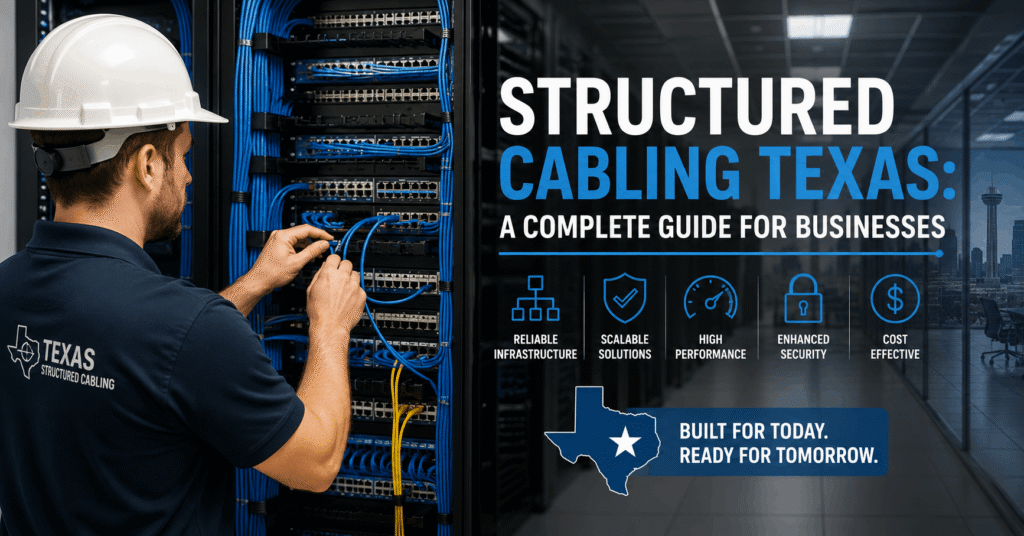
If your business relies on the internet, phones, or networked devices, your cabling infrastructure matters more than you think. Structured cabling Texas businesses use today is the backbone of every reliable office network. It keeps your team connected, your systems running fast, and your operations free from costly downtime.
This guide explains what structured cabling is, how it works, and why Texas businesses of all sizes are investing in professional installations. Whether you are opening a new office, expanding a data center, or upgrading an outdated network, this resource will help you make the right decisions.
What Is Structured Cabling?
Structured cabling is an organized system of cables and hardware that supports a building’s communications network. It creates a standard framework for carrying voice, data, video, and other signals throughout a commercial space.
Think of it like the plumbing inside a building. You do not see it on the surface, but everything depends on it working correctly. A well-designed structured cabling system routes all your network traffic through a tidy, logical layout.
Unlike older, point-to-point wiring setups, a structured cabling system follows industry standards set by organizations like ANSI/TIA and ISO/IEC. This makes the system predictable, easier to manage, and built to last.
The Six Core Components of a Structured Cabling System
A properly designed structured network cabling system is made up of six main components. Each plays a specific role in how your network performs.
1. Entrance Facilities
This is where outside telecom lines enter your building. It is the connection point between your internal cabling and your service provider. Protecting this area is critical for keeping your network stable.
2. Equipment Rooms
Equipment rooms house your core network hardware. This includes servers, switches, patch panels, and power units. A well-organized equipment room makes maintenance faster and reduces the risk of human error.
3. Backbone Cabling
Backbone cabling connects different sections of a building or campus. It typically uses fiber optic cables to handle large amounts of data over longer distances. This is especially important for multi-floor offices or buildings with multiple wings.
4. Telecommunications Rooms
Also called IDF closets, these are smaller rooms on each floor or zone of a building. They connect the backbone cabling to the horizontal cabling that reaches individual workstations.
5. Horizontal Cabling
Horizontal cabling runs from the telecom room to each workstation or device on the same floor. Most businesses use Cat6 or Cat6A copper cables for this layer. It supports voice, data, and even some video signals.
6. Work Area Components
These are the cables, outlets, and adapters at the end-user level. This is where employees plug in their computers, phones, and other networked devices. Clean, properly labeled work area components make daily use simple.
Types of Structured Cabling: Fiber vs. Copper

When planning your structured cabling installation, you will need to choose between fiber optic and copper cables. Both have their place in a modern network.
Fiber Optic Cabling
Fiber uses light signals to carry data at very high speeds over long distances. It is ideal for backbone connections and high-demand environments. Benefits of fiber include:
• Speeds up to 100 Gbps and beyond
• Immune to electromagnetic interference (EMI)
• Supports runs up to several kilometers
• Best for data centers and campus environments
ITS offers professional fiber optic installation services for businesses across Texas and nationwide.
Copper Cabling
Copper cabling remains the most widely used solution for horizontal runs in offices. It is cost-effective and supports all standard business applications. Common types include:
• Cat5e: Supports speeds up to 1 Gbps over 100 meters
• Cat6: Supports speeds up to 10 Gbps over shorter runs
• Cat6A: The gold standard for modern offices in 2026, supporting full 10 Gbps speeds over 100 meters
Our copper cabling solutions cover everything from small offices to large commercial facilities across Texas.
Why Structured Cabling Texas Businesses Need It Now
Texas is one of the fastest-growing states in the country for business. Cities like Houston, Dallas, Austin, and San Antonio are seeing rapid expansion in technology, healthcare, energy, and commercial real estate. That growth creates a strong demand for reliable network infrastructure.
Here is why structured cabling is a priority for Texas businesses right now.
Scalability for Fast-Growing Companies
Texas businesses grow fast. A structured cabling system is built to scale. Adding new workstations, floors, or locations becomes much simpler when your infrastructure is organized correctly. You avoid the expense of rewiring from scratch every time you expand.
Reduced Downtime and Troubleshooting Time
Messy, unorganized cabling leads to network problems that are hard to diagnose. With structured cabling, every cable is labeled, documented, and routed logically. When something goes wrong, your IT team can find the issue and fix it quickly. Downtime costs businesses thousands of dollars per hour. A clean cabling system helps you avoid that.
Support for Modern Technology
Modern offices depend on more devices than ever. VoIP phones, security cameras, wireless access points, IoT sensors, and video conferencing systems all run over your network. Structured cabling is designed to handle this load reliably.
ITS also provides wireless services and managed Wi-Fi that work seamlessly alongside a structured cabling infrastructure.
Cleaner Aesthetic and Safer Work Environment
Tangled cables are a fire hazard and a tripping risk. They also make a bad impression on clients. Structured cabling is routed through conduits, raceways, and cable trays. Everything is hidden, organized, and safe.
Industries That Rely on Structured Network Cabling in Texas
Structured cabling is not just for large corporations. It serves businesses across many sectors. Some of the most common industries ITS supports in Texas include:
• Healthcare: Hospitals and clinics need fast, secure networks for patient data and medical equipment.
• Energy and Oil and Gas: Texas energy companies rely on strong networks to manage operations and data analysis.
• Education: Schools and universities need cabling that supports classrooms, labs, and administrative offices.
• Hospitality: Hotels and resorts need reliable guest Wi-Fi, security systems, and back-end operations running on the same network.
• Retail and Commercial: Stores and business parks need structured cabling for POS systems, security, and communications.
• Government and Institutions: Federal and state agencies need certified, compliant cabling infrastructure.
How Structured Cabling Supports Data Center Operations
Data centers depend on structured cabling more than any other facility type. In a data center, every cable run must be precise, labeled, and traceable. Even a single misrouted cable can cause a significant network failure.
ITS provides full data center installation services that include structured cabling design, backbone fiber, MDF/IDF rack integration, and grounding and bonding. Our BICSI-certified technicians follow strict industry standards to ensure your data center infrastructure meets the highest performance and compliance requirements.
Whether you are building a new data center or upgrading an existing one, proper structured cabling is the foundation everything else depends on.
Structured Cabling Standards You Should Know
When choosing a structured cabling installer, make sure they follow recognized industry standards. These standards ensure consistency, reliability, and performance across your installation.
• ANSI/TIA-568: The primary standard for commercial building telecommunications cabling in North America.
• ANSI/TIA-942: The standard specifically for data center cabling and infrastructure design.
• ISO/IEC 11801: The international standard for generic cabling in customer premises.
• BICSI Standards: Guidelines developed by the Building Industry Consulting Service International for low-voltage cabling professionals.
You can learn more about BICSI certification and industry standards at www.bicsi.org. ITS employs BICSI-certified technicians who apply these standards to every project we handle.
Signs Your Current Cabling System Needs an Upgrade
Not sure if your existing cabling is holding you back? Here are some clear warning signs.
• Frequent network slowdowns or dropped connections
• Unorganized or unlabeled cables in your server room
• Cables running under desks, along floors, or through hallways
• Difficulty adding new devices or workstations to your network
• Your building uses cabling older than 10 to 15 years
• Your IT team spends too much time tracing cables to troubleshoot
• You are moving into a new or renovated facility
If any of these sound familiar, it is time to speak with a structured cabling specialist in Texas. A professional assessment can identify the issues and provide a clear path forward.
What to Expect During a Structured Cabling Installation
Working with a professional installer makes the process smooth and predictable. Here is a general overview of how a structured cabling project works at ITS.
Step 1: Site Survey and Assessment
Our team visits your facility to understand your layout, your current infrastructure, and your future technology goals. We document everything and identify the best routing paths for cables.
Step 2: Custom System Design
We design a structured cabling system tailored to your specific building and business requirements. This includes cable type selection, network drop placement, rack design, and labeling strategy.
Step 3: Installation
Our BICSI-certified technicians handle the full installation. We work around your schedule to minimize disruption. Most commercial installations can be completed during off-hours to keep your business running.
Step 4: Testing and Certification
Every cable run is tested and certified to meet industry performance standards. We provide documentation showing that your system passes all required tests. This protects your investment and ensures warranty compliance.
Step 5: Documentation and Handover
We provide complete as-built documentation for your cabling system. This includes cable labels, port assignments, and network diagrams. Your team has everything they need to manage the system going forward.
Choosing the Right Structured Cabling Company in Texas
Not all cabling contractors are equal. Here is what to look for when choosing a structured cabling partner.
• BICSI certification: Certifications show that technicians meet professional standards for low-voltage cabling.
• Industry experience: Look for a company with a proven track record across different building types and industries.
• Turnkey capabilities: A single provider who handles design, installation, and testing saves time and reduces risk.
• Nationwide reach: If your business has multiple locations, choose a company that can support all of them.
• Workmanship guarantee: A reputable company stands behind its work with a clear guarantee.
Integrated Technology Solutions meets all of these standards. With over 35 years of combined leadership experience and BICSI-certified technicians on every project, we are one of the most trusted structured cabling providers in Texas.
Structured Cabling and Security Systems: A Natural Fit
Your security system runs on the same network as the rest of your business. That means the quality of your cabling directly impacts how well your cameras, access control, and alarm systems perform.
ITS integrates structured cabling with security and surveillance systems to deliver a fully unified infrastructure. This approach ensures your cameras and access points receive the bandwidth they need while keeping your network clean and organized.
For businesses that need a comprehensive technology buildout, you can review our full services overview to see how each solution works together.
Frequently Asked Questions About Structured Cabling in Texas
How long does a structured cabling installation take?
Most small to mid-size office installations are completed within a few days. Larger commercial projects or data centers may take several weeks depending on complexity.
Can cabling be installed without disrupting my business?
Yes. Professional structured cabling teams use phased installation schedules and can work during evenings or weekends. Most businesses experience little to no disruption to daily operations.
What cabling standard should my Texas office use in 2026?
For horizontal cabling, Cat6A is the recommended standard for most commercial offices in 2026. For backbone connections, single-mode fiber is the best choice for long-distance and high-bandwidth applications.
Does ITS handle multi-location cabling projects across Texas?
Yes. ITS manages multi-site network cabling deployments across all 50 states, coordinated from our Texas headquarters. We use standardized processes to deliver consistent results at every location.
What is the difference between structured cabling and regular wiring?
Regular or unstructured wiring is installed without a planned system. It tends to be messy, hard to maintain, and difficult to upgrade. Structured cabling follows a planned design with standardized components, proper labeling, and a logical layout that supports long-term performance and growth.
For a deeper look at cabling standards, you can visit TIA Online (Telecommunications Industry Association), which publishes the commercial building wiring standards followed by certified installers across the United States.
Ready to Upgrade Your Structured Cabling in Texas?
Your network is only as strong as the cabling underneath it. Businesses across Houston, Dallas, Austin, San Antonio, and beyond trust Integrated Technology Solutions to design and install structured cabling systems that perform reliably for years.
From a single office to a multi-site enterprise rollout, we bring the same level of precision, certification, and care to every project. Our team is ready to assess your current setup and design a structured cabling system built for how your business operates today and where it is heading tomorrow.
Contact Integrated Technology Solutions today to request a free quote and speak with a structured cabling expert who knows Texas businesses. Call us at +1 888-985-5334 or visit our contact page to get started.
